Self Improvement Icons: Strategic Visual Tools for Clear Communication and Effective Design
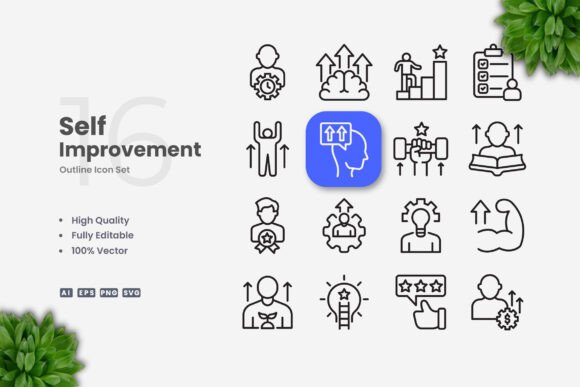
Self Improvement Icons are more than just visual elements—they are powerful tools that can enhance communication, streamline design processes, and support strategic goals across various platforms. Whether you're building a website, creating a mobile app, or designing marketing materials, these icons offer a clean, versatile, and professional approach to visual storytelling.
Why Self Improvement Icons Matter in Modern Design
In today’s fast-paced digital landscape, clarity and efficiency are essential. Self Improvement Icons provide a simple yet effective way to convey complex ideas without overwhelming the audience. Their minimalist style ensures they remain relevant across different mediums, from social media posts to printed banners.
These icons are designed with practicality in mind. Each icon is crafted to be easily recognizable, making them ideal for use in infographics, educational content, and branding materials. By incorporating Self Improvement Icons into your projects, you can improve user engagement, reduce cognitive load, and create a more intuitive experience for your audience.
Strategic Use of Self Improvement Icons in Business and Creativity
For entrepreneurs, marketers, and creators, Self Improvement Icons serve as a valuable asset in visual communication. They help in presenting information in a structured and visually appealing manner, which is crucial when communicating with clients, stakeholders, or customers.
Consider using Self Improvement Icons to illustrate key concepts in a business plan, marketing strategy, or project roadmap. These icons can also support learning and development initiatives by breaking down complex topics into digestible visual components. For educators and trainers, this makes it easier to engage students and reinforce important lessons.
Freelancers and small business owners can benefit from the flexibility of Self Improvement Icons. With 100% vector design, they can be resized, recolored, or modified to fit specific brand guidelines. This level of customization ensures that the icons align with your overall visual identity while maintaining a professional appearance.
When and How to Use Self Improvement Icons Effectively
The best time to use Self Improvement Icons is during the planning phase of a project. Before finalizing designs, consider how these icons can simplify your message and improve user interaction. For example, if you’re creating a productivity app, integrating icons related to goal-setting, time management, or habit formation can make the interface more intuitive.
When approaching the use of Self Improvement Icons, start by identifying your core message or objective. Ask yourself: What do I want the audience to understand or feel? Which icons best represent that idea? This thoughtful process ensures that the icons serve a purpose rather than being added arbitrarily.
It’s also important to consider the context in which the icons will be used. A logo for a self-improvement blog may require a different style compared to an infographic for a corporate training program. Understanding your audience and platform will guide your selection and placement of icons.
Planning Tips for Maximizing the Value of Self Improvement Icons
To get the most out of Self Improvement Icons, take a strategic approach to their integration. Start by mapping out the key themes or concepts you want to highlight. Then, select icons that align with those themes and fit within your design framework.
Another useful tip is to maintain consistency. If you’re using multiple icons, ensure they share a similar style, color scheme, or stroke weight. This creates a cohesive look and prevents visual clutter. For instance, if you’re designing a presentation on personal growth, using a uniform set of icons throughout the slides will reinforce the theme and enhance readability.
Additionally, think about how the icons will be used across different formats. Since Self Improvement Icons are available in multiple file types—including AI, EPS, SVG, and PNG—they can be adapted for both digital and print media. This versatility makes them a valuable resource for designers who work across multiple platforms.
Risks of Using Self Improvement Icons Without Clear Intent
While Self Improvement Icons are highly adaptable, they can lose their effectiveness if used without clear intent. Randomly placing icons in a design may confuse the audience or dilute the message. It’s important to avoid overloading visuals with unnecessary elements that don’t contribute to the overall goal.
Without a defined purpose, icons can become generic or misinterpreted. For example, using a “goal” icon in a section about financial planning might not resonate with the intended audience if the context isn’t clear. Always ensure that each icon serves a specific function and supports the narrative you’re trying to build.
Another risk is relying too heavily on icons without providing supporting text. While icons are great for quick recognition, they should be paired with clear labels or descriptions to avoid ambiguity. This is especially important in educational or instructional content where precision matters.
How to Use Self Improvement Icons Intentionally
Intentional use of Self Improvement Icons starts with understanding your audience and objectives. Ask questions like: Who is my target audience? What is the main message I want to convey? How can icons help me communicate this more effectively?
One effective strategy is to use icons as part of a visual hierarchy. For instance, in a website layout, icons can be used to draw attention to key sections such as “Learn,” “Grow,” or “Succeed.” This helps users navigate the site more efficiently and reinforces the core message of the platform.
Another approach is to integrate icons into storytelling. Whether you’re writing a blog post, creating a video, or developing a course, icons can act as visual cues that guide the reader or viewer through the content. This is particularly useful in long-form content where maintaining engagement is critical.
Long-Term Value of Self Improvement Icons in Branding and Communication
Over time, Self Improvement Icons can become a cornerstone of your brand’s visual language. Consistent use of these icons helps build recognition and trust with your audience. When people see a familiar icon associated with your brand, it reinforces the message and values you stand for.
Moreover, the ability to customize and edit these icons means they can evolve alongside your brand. As your business grows or changes direction, you can update the icons to reflect new goals or messaging. This adaptability ensures that your visual assets remain relevant and impactful.
For professionals and decision-makers, the long-term value of Self Improvement Icons lies in their ability to support clear communication and efficient design. Whether you’re presenting to investors, launching a product, or engaging with customers, these icons provide a professional and polished way to express your vision.